
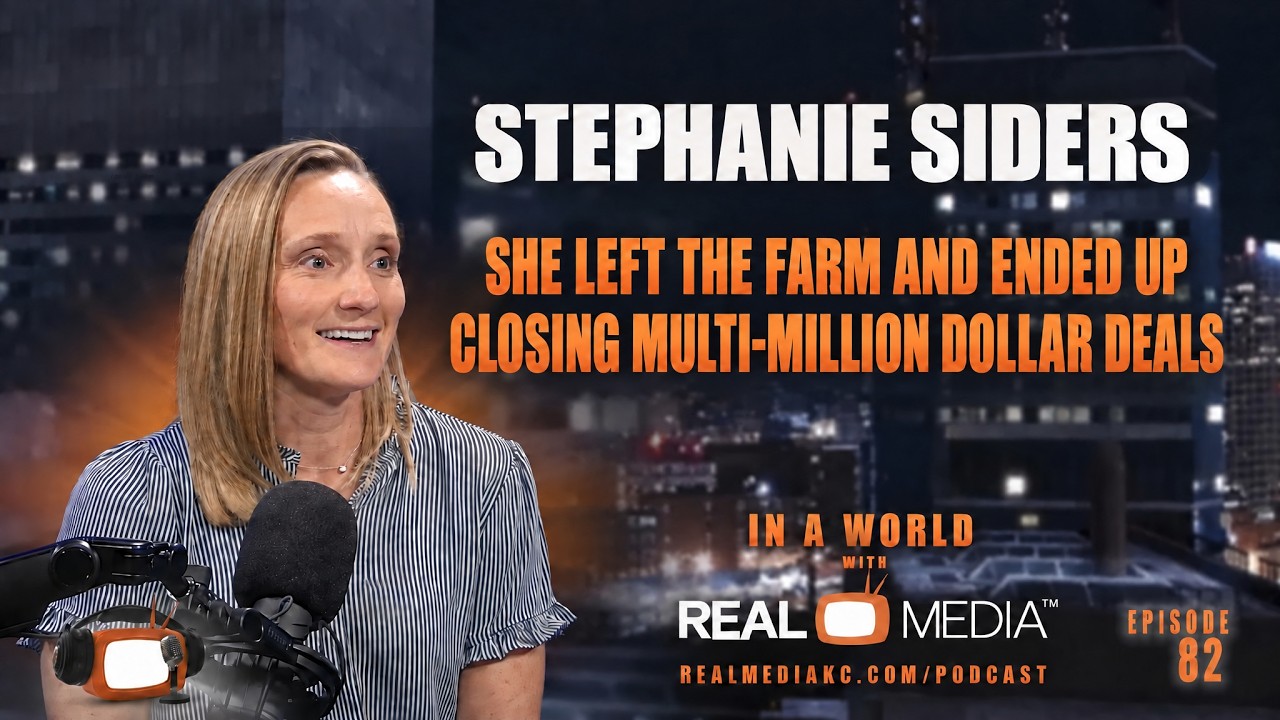
Stephanie Siders – She Left the Farm and Ended Up Closing Multi-Million Dollar Deals
In this episode
- 00:01Hello, and welcome to In a World with Real Media. I'm…
- 05:14Shock. I knew fairly quickly that that maybe wasn't the environment…
- 12:50Mean, that's got to be - We do. Sometimes it's hard…
- 22:25Yeah, I think there's just something to be said for connecting…
- 32:04Bad, does it? It's a lot of fun. So September 23rd,…
- 42:19There really is. And it's great timing for that question because…
About the guest

Stephanie Siders
Managing Director · Turnstone Investment Banking
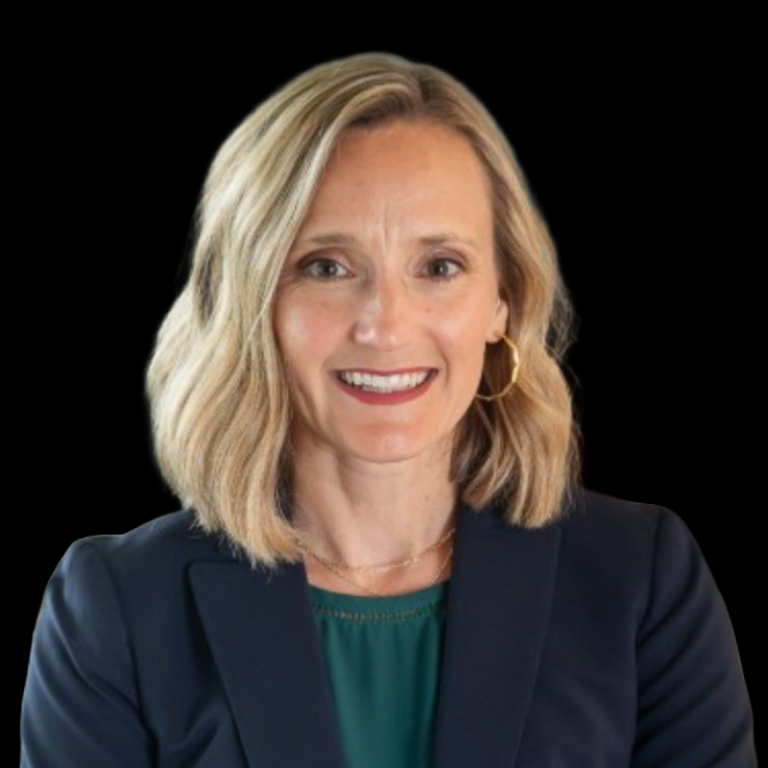
Stephanie is the Managing Director at Turnstone Investment Banking, a boutique investment banking firm located in Kansas City. We provide advisory services, including sell-side and buy-side M&A, capital raising, and strategic advice, to family and founder-owned companies across a broad range of industries. Turnstone Investment Banking was formerly known as CC Capital Advisors.
Read the transcript8,482 words
Brad00:01Hello, and welcome to In a World with Real Media. I'm your host, Brad Burrow, and today we have Stephanie Seiders, who is the managing director of Turnstone Investment Banking. Real excited to have Stephanie on. Just in all transparency, we've done a lot of work with ACG, a group that we're going to talk about in the podcast a lot in the past. So excited to kind of hear where things are going. And Stephanie, thanks for being on the podcast. It's awesome.
Stephanie00:54Yeah. Thank you for having me. I'm excited for the conversation.
Brad00:56So I got to go out and do a little research and kind of find out about people, and you're a K State alum.
Stephanie01:02I am. Very proud one at that.
Brad01:04Yeah. So my youngest son, well, he'll be a senior this year at K-State. Oh, good for you. Good
Stephanie01:09For him.
Brad01:10Yeah. So we're up to Manhattan quite a bit, man happiness. Good.
Stephanie01:14Hopefully he loves it.
Brad01:16Yeah. Oh, he loves it. He loves it. His brother went to KU, and so there's kind of a little rivalry in our family about that, but we've really enjoyed going up there. How did you end up at
Stephanie01:31K-State? So I was a third generation K-Stater. Both my parents, all my aunts and uncles, all my cousins, all of us went to K-State, starting with my grandparents. So definitely family tradition and I didn't think about going anywhere else. It was just, you go visit and it felt like home.
Brad01:55Where did you grow up?
Stephanie01:56So I'm a farm kid from Northwest Kansas.
Brad01:59Really? So
Stephanie02:00Very, very
Brad02:01Small town. Where at? Tell
Stephanie02:02Me where. The name of the town's Palco.
Brad02:04Yes.
Stephanie02:05You've heard of it?
Brad02:06Well, I didn't grow up, but my last two years of school, I was in Logan, Kansas. No. Yes. Oh, that's
Stephanie02:12Incredible.
Brad02:12It's about 30 miles from Palco. Okay. You
Stephanie02:14Actually have heard of
Brad02:16It. Yeah. So were your parents in the oil business by chance?
Stephanie02:20Nope. Unfortunately, just farming. We had no oil. I'm a, gosh, fourth generation farm. I guess I'm not a farmer, but my parents both grew up on farms as well. And so my upbringing was very different than what we have here in Kansas City, but that has definitely set me up for some of my successes.
Brad02:47That's so interesting. So I played eight man football. I think we might have played Palco.
Stephanie02:51We were in the same league.
Brad02:54Yeah. So I graduated in 81 from there.
Stephanie02:57Okay. How many were in your graduating class?
Brad03:0037. And we had a big class. That is a big class. For that time. I just went back for my 40 year -
Stephanie03:07Oh,
Brad03:07Good. I'm going to date all this stuff, but my 40 year reunion, that's one of the first times I'd been back, that's the second time I've been back since then. And it was just interesting to be back in that culture. Logan hasn't really changed that much. I imagine Palco hasn't either.
Stephanie03:24No, unfortunately it's gotten smaller, if anything, which is, it's sad to see those small towns get
Brad03:31Smaller
Stephanie03:32And kind of dry up, but it is good to get back once in a while and remember how we were brought up and the people are so good that I do cherish the childhood that I was given.
Brad03:47So I'm going to ask you this later, but the work ethic that we grew up with out there, it's different, isn't it?
Stephanie03:55It is different.
Brad03:56Yeah. So maybe we can talk about that at some point. My parents owned an oil well servicing business. Okay.
Stephanie04:02Yeah. If you weren't a farmer, you were in the oil and gas
Brad04:04Business. Yeah. So yeah, it was interesting. It's called Morrison Well Service. Okay. So I don't know if you remember that name or not. I
Stephanie04:11Don't, but -
Brad04:13They had one part of their business in Palco and one in Logan.
Stephanie04:17Okay. Yeah. I'm sure that back then I was familiar with it, but yeah. Wow. Small world. It's not often that I meet someone who knows where Palco is.
Brad04:27Yeah. I win the prize.
Stephanie04:29You do.
Brad04:29That's awesome. Well, so I was kind of looking through it. I love talking about how people progress through their career. So Hallmark Cards. So that had to be. Were you excited to get in a position with Hallmark Cards?
Stephanie04:45I was. I was very excited to land there, but more than anything, I was excited to be in the big city of Kansas City. So was excited to end up here. I knew that Hallmark was just a great place to work and I was going to be surrounded by great people. So it was a really good place to start my career. Definitely a bit of a shock coming from a small town and then all of a sudden working for a company that has 4,000 employees. Yeah.
Brad05:13What was that like? I bet that was a
Stephanie05:14Shock. I knew fairly quickly that that maybe wasn't the environment for me and it probably is because of my background and just coming from a small town and K-State in a lot of ways is just a bunch of small town kids. There's plenty of Johnson County and Kansas City kids, but lots of farm kids, lots of small town kids. So coming to Kansas City and working for a big company, in a lot of ways I thought I'm just a number here. This is very bureaucratic. It's just great place to start. It just wasn't the right fit long term. And that has nothing to do with Hallmark. It's more just what I needed personally to feel fulfilled.
Brad06:01Did the traffic freak you out when you got here? It
Stephanie06:04Did. I interned the summer before my senior year at State Street downtown and I lived out in Lenexa and so took I35 downtown every morning and I was white knuckled every day. I mean, it was more traffic than I ever driven in. So that was really good for me because I got used to it quickly and learned to navigate. But yeah, that was definitely a shock.
Brad06:39And then so we progress forward, you become part of Turnstone and you've been there for a lot of years.
Stephanie06:46A long time. So yeah, I left Hallmark and started with, at that time we were a small firm called Kristen Berry Coliton Company. So small independent investment banking firm advising mergers and acquisitions. And little did I know that I would be. We've had some different iterations as a firm over the years, but I've progressed from kind of junior analyst now to managing director and it is shocking to me how time flies.
Brad07:19I
Stephanie07:19Can't believe it's been almost 20 years.
Brad07:21Yeah, that's a long time. It is a time. Long time to be with one company. It rarely happens these days. It
Stephanie07:26Doesn't happen much anymore. So I feel very fortunate in that regard because I've always taken the stance of the grass is not always greener. There may be other opportunities, but there is something to knowing what you have and just really being a part of a great culture.
Brad07:45Yeah. That's awesome. So tell me a little bit about what you do, maybe even explain what an investment banker does.
Stephanie07:54Yes. I think that's always good to level set right out of the gate
Brad07:59Because
Stephanie07:59An investment bank does not do any investments. So it is a bit misleading just from the name. So what we do is we work with primarily family owned, founder-owned businesses regionally, not just in Kansas City, but occasionally our work will take us all over the world. But for the most part, we're focused on the Kansas City region, largely Kansas, Missouri, kind of up to Nebraska. And we're helping companies. Often it's an exit transaction where the family has decided that there isn't a next generation who's ready to take over or there just isn't an opportunity to elevate a management team and they need to sell. So we will help them through the process of preparing the company, marketing it, finding the right buyer, all the way through closing due diligence, oftentimes post-closing issues. And then on the other side of the coin, we do buy-side acquisition strategies as well.
Stephanie09:05So oftentimes that's also a family owned company, but maybe a bigger company that would like to grow. They want to make acquisitions. They don't know how. They've never done it before. And so we will help them develop a strategy, go out. We find the targets, we contact them and help them execute on
Brad09:27Transactions. Is there a size of company that is really kind of in your sweet spot?
Stephanie09:32Yeah. Our sweet spot tends to be, I would say 10 to 100 million of value. We can do larger, but most of the deals that we end up doing really is a function of a lot of the companies that are here in Kansas City tend to be in that size range.
Brad09:47So
Stephanie09:4910 to 50 is probably where we spend most of our time, but if we can do larger, that's even better.
Brad09:55Yeah. That's got to be kind of fun. You're learning about. Every day is probably different, right?
Stephanie09:59Every day is. Hands down, I think across the board, everyone on our team, that's one thing that we just love about what we do. Every day's different. Every deal is very different. We are industry agnostic. So rather than becoming an expert on one specific sector, we get to learn a lot about a broad spectrum of companies. So it could be healthcare, it could be business services, manufacturing, just anything and everything. And you do it for long enough and you really look back and think, "Wow, I've been exposed to a lot of different
Brad10:34Things."
Stephanie10:35So it is one of the things that I really appreciate about our firm and our lack of focus from an industry perspective. But it really, I think at the end of the day, the most important thing is we are experts in doing deals and it's not necessary to be an expert in the industry. It is really important to have the expertise of knowing how to execute and knowing what to look for and to successfully guide companies through the deal.
Brad11:06That's a fragile process too, isn't
Stephanie11:08It? Oh, very, very. You're dealing with a lot of different people. Egos, expectations. Most importantly, emotions can run really high. We often say that we're half psychiatrists, half financial experts, because it can be a really emotional process to take a company that, say, as a business owner, you've built it from the ground up over 40, sometimes 50 years, sometimes it's your great grandparents founded the company and you're fourth generation. That can be really hard to let go of and to let somebody else take the reins. And oftentimes it's exhausting. When you're tired and it just feels like you're being put through the ringer, everything feels kind of like an attack. And so it can be really challenging. So we're that buffer between buyer and seller where we have the opportunity to just be the calm presence that helps talk through certain issues, helps guide through we know what the issue is here.
Stephanie12:17We're here to listen to you and hopefully we end up on the other side with a successful deal.
Brad12:22Talk them off the ledge sometimes.
Stephanie12:24I mean, often that is the case because there's a lot of knee jerk reactions happening where suddenly it's like, "Absolutely not. I'm walking away." And then let the emotions die down and walk it back. And oftentimes we're able to get things back on track once it's been derailed.
Brad12:47Yeah. Do you guys celebrate after every sale? I
Stephanie12:50Mean, that's got to be - We do. Sometimes it's hard because it can be a little anticlimactic. I always pictured like, "Oh, a deal closing would be all these people around the table and there's signing of documents and then at the end everybody cheers." Well, when in reality it's a phone call, everybody agrees, "Okay, we're closed and that's it." But one of our previous clients gave us a bell that we ring now after it went. So when we close the deal, we ring the bell and we kind of gather as a group and debrief and try to celebrate. But it is hard because we're often working on lots of deals at once. So it's like, "Okay, well got that one done. Time to move on to the next." So we don't probably spend enough time celebrating, but some - Maybe the
Brad13:47Bigger ones.
Stephanie13:48The bigger ones, it feels that way or the ones that it felt like maybe we weren't going to get there and it feels really rewarding to cross that finish line. So we do always celebrate with our clients because we think that's important to have that wrap up and finish it
Brad14:07Up
Stephanie14:07With a good celebration, everybody agreeing that it was a great outcome.
Brad14:13And a big check, right? Well, we should do
Stephanie14:16That. Like publishers
Brad14:19Clearing house. Yeah, that's funny. Yeah. So how did you get connected to ACG? Currently you're a board member, but you're currently the chapter president, correct? Correct.
Stephanie14:30Yes.
Brad14:31And so how did you get involved with ACG?
Stephanie14:35The chapter itself has been in Kansas City for more than 20 years, and I'm fortunate to be a part of a firm that was really critical to getting our chapter off the ground all those years ago. So it's really been a passing of the torch for the people in our firm where several of us have been president. Just as a firm, it's been really important to us collectively that we be involved in the chapter, that we be involved in the business community and really be a good partner
Stephanie15:13To the other members and to the other companies that are involved. ACG is really critical to deal making as we call it. And I would say investment banks are a really important part of that ecosystem where we are kind of gatekeeping the deals. We are bringing the deals to market. And so we have the chance to really work with everyone that is involved with ACG. There's a reason for us to know them. So it's been important for us to be involved as a firm. And so as I've come up through the ranks of Turnstone, I slowly got more involved and joined a committee than joined the board and really have found it to be incredibly rewarding. So the board and the membership overall is just a really great group of people and it's been fun to see our chapter grow, add new subgroups within the broader chapter, add new events, and it's been really rewarding to be a part of that experience.
Brad16:23Yeah. So for our listeners that don't know what ACG is, can you explain what it is?
Stephanie16:29Absolutely. So ACG stands for Association for Corporate Growth, and ACG is a broader organization of which we have a local chapter. So there are chapters all across the country, all with a similar mission, though we each operate with our own separate leadership. And if we want to go a certain direction, then we're able to do that. But our mission is to connect local business leaders through compelling programming and relationship building events. And so those two things are so critical for the organization because it's connecting the people, and if you don't have a connection, then you're probably not going to come back. But coupling that with really good programming, we have found that that's the combination that really. It sucks people in and it makes them go, "Oh wow, that was a great experience. I want to come back." Those are kind of the two pieces that we work really hard to continue to cultivate.
Stephanie17:38The proof is in, I guess, the growth of the organization and people really, I think, are looking for that type of organization that offers the people in the programming.
Brad17:48Yeah. So give me some examples of some of the programming. What types of things are people getting to learn and experience? Yeah,
Stephanie17:57Absolutely. So one of our. I guess the cornerstone of the programming is what typically is breakfast meetings. And so occasionally it may be a lunch meeting, but it's really just find a topic and then from there, who is that speaker? Who is that panel? Who are the experts that can enlighten us as a
Brad18:21Membership
Stephanie18:22And our guests on whatever that topic is? So we try to create some variety where it may be a topic that's really relevant right now or current to either Kansas City or just doing business in general. And then sprinkling in a few success stories
Brad18:44Of
Stephanie18:44Kansas City businesses that have done that growth. So they have made acquisitions, they have grown organically. They're kind of the movers and shakers. A lot of times it's companies that aren't just a Kansas City company
Brad18:58Anymore,
Stephanie18:58Now they're nationwide, but telling us that whole story and those tend to be the really most compelling types of program that we offer. From there, we also have some kind of more special events, I would say, that includes golf tournament. We have what's called a Capital Connection and Wine Tasting Event. We've got just your typical social happy hours and Christmas party. From there, one of the things that we've done that has been, I think, really critical to our success in recent years is one, about probably 10 years ago, we realized as an organization that we needed to connect more with the under 40 crowd. My first meeting, I was probably 25, and I walked into the Kansas City Marriott where we were holding the breakfast meeting and looked around and I think there were two other women in the room and everyone was wearing suits and ties and I though, "Oh, this is not fun." I didn't go back again for a while and I wasn't the first person to recognize that we really needed to broaden our focus and bringing in a younger crowd was really the start of that.
Stephanie20:24And so started a, we call it ACG Next. And so that is the 40 and under, and that group is thriving. They come to the regular programming, but they also have their own special events, so they're able to connect with one another without all of us that are over 40.
Stephanie20:45It's kind of an easy way to dip your toe in and make some connections and then you feel a little more comfortable entering that room with the whole group. So that's been great. And then more recently we've added a women's group and that's been incredibly successful over the last couple of years just to attract more women who may be intimidated again by entering the room full of people that they don't know, but creating smaller groups that are a little more approachable and inviting. Those two things I think have been really important to our success in recent years and it's been the just evolution I think of the business community overall. Now it's a much more relaxed environment at meetings. There's people wearing jeans, there's people, not many suits and ties anymore. I think that's kind of a function of how just the world has evolved over the last 20 years.
Stephanie21:43But I think juxtaposing the walking in the room in 2008 versus 2026, it's a big difference
Brad21:54And
Stephanie21:54It's a welcoming, just really educational and helpful environment.
Brad21:59Yeah. The 40 under 40 kind of group, I have a guy on my board actually, Nick Giuliani,
Stephanie22:07Who
Brad22:08Runs Top Gun or is part of Top Gun. But that's who that group is and they are very, very. I mean, they love getting together. They love doing things together. They support each other and the networking part of it is amazing. I think that's -
Stephanie22:25Yeah, I think there's just something to be said for connecting with people that you feel like you have something in common with versus if you walk into a room and it's a senior banker and a partner at a law firm, that may be a little intimidating if you're 29, but I think we can get them there if we at least introduce them to a group that is more their cohort. And so that's been fun to kind of watch the evolution there.
Brad22:54Yeah. So tell me what's your experience been like? I mean, for you personally, what's that? I know we talked about it a little bit, but now being the chapter president, what's that been like?
Stephanie23:08It's been fun to just continually get more involved and more ingrained in the organization and to be challenged and really, as a leader, think about what do we need to do? We need to constantly be pushing ourselves. We need to be finding new ways to attract different members and new members and get the very best programming and just continually trying to think outside of the box. So it's been, I would say, in conjunction with doing the same in my day-to-day job, it's just been really fun to see what we can do because our board is such a great group of really talented folks that
Brad23:54Are
Stephanie23:55The best at their craft and now you're throwing all these people together and being able to execute with that group has been a lot of fun. And we've been able to. I've mentioned a couple times, we've grown a lot, but I also get feedback frequently that, wow, the programming is really good. I would come back just to see who you're going to have speak next time. So just for me personally, seeing more and more people show up every month, we're outgrowing the space that we've used for the last few years. It's a great problem to have when you don't have enough space because so many people want to attend.
Brad24:39Yeah. I remember, so going back a little bit, Casey had called me before COVID happened or when COVID was happening, "Hey, we need to do these events." So we streamed probably five or six, I can't remember events here, but we had some pretty cool things happening here with John Sherman had just become the
Stephanie24:58Owner of
Brad24:59The Royals and Joel Goldberg, and then we streamed that out. I remember that. She did a really good job of keeping it going when nobody could meet.
Stephanie25:07Yeah.
Brad25:07Well,
Stephanie25:07And I think, I mean, one, that speaks to Casey and just if you're a group like ours to have a really strong executive director, especially in challenging times like that, to keep things moving, because the rest of us are. We have jobs and we're kind of doing this on the side, but she really pushes us to keep, "Are you doing this? Are you staying on top of this?" And throughout that period, having someone like Casey was so critical for us to just keep going and continue to deliver a product despite the fact that we couldn't do the in-person stuff. And really, every organization lost members through that period, but really we bounced back pretty quickly. So I feel very fortunate for
Brad25:56That. Well, just being able to stay connected with everybody when nobody could come to work. Absolutely. Or a lot of people couldn't come to work. We were still able to do some things like that here. Good
Stephanie26:05Thing because you were able to help the rest of us stay connected in a lot of ways.
Brad26:10But it was really fun. I mean, that was fun having people like that here. Now people are doing hybrid type things, still value getting together, but I'm still seeing some other types of things like that. It definitely changed
Stephanie26:23The way we do
Brad26:24Everything. How'd that change your business? I bet that changed
Stephanie26:28The - Oh man. COVID for our firm, it was so hard in a lot of ways. We had never been a work from home and then shifting completely to work from home had its own challenges, but like everyone else, we figured it out. But on the deal side, I often will think back on the deals that we got done during that period, and I can't believe we were able to do what we were able to do. Hard
Brad26:59To believe anybody would even want to buy a business then.
Stephanie27:02We had a couple of deals that were out in market as things were going down the hill. And the two examples that I always think about were one was an experiential marketing company. So in person - There's no experiential marketing. Corporate events. And we're trying to tell potential buyers, "It's going to come back. This is an international issue. It's not a United States issue." And then a few weeks would go by and we'd say, "Now they're offering virtual events and we did a big pivot and everything's going to be fine." The company really did do this amazing pivot and their business survived and then it thrived. But through all of that, at one point we looked at the owners and said, "Do you want us to keep going? Because maybe we should push pause." And they said, "No, let's keep going." So we sold that company.
Stephanie28:01Yeah. That was a
Brad28:03Celebration
Stephanie28:03Problem. Oh, man. That was one that was probably one of the more rewarding ones. And then the other one was a spray starch business at a time whose main customer was dry cleaning companies. No one was wearing dress clothes for months on end, and we were going into due diligence with a buyer and trying to help them understand that this would come out on the other side, and we got that one done too. So those were two major successes that we had that. It really was eye-opening even after I'd been in this business for a while and some of our younger team members, that was pretty early in their investment banking career. I think just now looking back on that and thinking about what we were able to accomplish kind of gives you the confidence to go, "We could close a deal through anything. If we could close those deals in the middle of a global pandemic, we can accomplish anything that we need to."
Brad29:10Well, I think that ACG might be one of the reasons we made it through the pandemic. Oh, that's
Stephanie29:15Great.
Brad29:16Honestly, because some of those events really help sustain because you can't go out and shoot on location. You can't do all the things that we do. It was a crazy, crazy
Stephanie29:28Time. Well, I'm glad.
Brad29:30I'm
Stephanie29:30Glad that that partnership
Brad29:32Happened. Switching gears a little bit, what are your priorities moving forward? So how long have you been the chapter president?
Stephanie29:41My term started in February of this year. It's just a one-year term, so it's kind of fast and furious. I've got a lot to accomplish in a pretty five months in pretty short period of time. Yeah. The last few years as The world has evolved and our organization has evolved. We made the decision earlier this year to merge our chapter with the broader organization, which has been kind of a movement that has been happening in the last few years. And that really doesn't impact our day-to-day member, but for us on the board gets us excited because it's going to allow us more opportunity to more resources for marketing. We get more of Casey's time and just the excitement that I have for the dividends that we'll pay. And it may be a couple years before all of that pays off. Really excited about that. We've been talking about a lot of membership and retention initiatives that we're going to be rolling out that I'm very excited about.
Stephanie30:58And then I mentioned earlier, our capital connection and wine tasting event takes place every September. And I chair that event and have gone to similar events in other markets this year and learned how they do it. And so we're kind of revamping that event, trying to attract out of town firms, out of town investment banks, out of town private equity firms to Kansas City, to our event to really showcase the deal community that we have here. And so we're really excited to see a much greater attendance there. We're going to be utilizing some scheduling software. So really excited to see how that turns out. But that's probably my favorite event of the year. It's really fun to just get together with people, talk about deals that people like my firm have to offer, but also just network with people in Kansas City and out. And then the last couple hours we get to taste some really great wine.
Brad32:03That doesn't sound too
Stephanie32:04Bad, does it? It's a lot of fun. So September 23rd, we're going to have that event and I'm excited to see how that turns out this year because I think it's going to be great.
Brad32:13Yeah. That sounds like a lot of fun. It
Stephanie32:15Is
Brad32:15Fun. Yeah. So what about the future? I mean, are you thinking, so you'll hand off to another chapter president next February or this coming February. What about the future of the organization? And you're kind of setting some things in place that can help grow.
Stephanie32:29Yeah. So I think it's not anything drastically different than what we have been doing for the last several years, but really just continuing to build on that. We've been really focused on how can we attract more members, more attendance from our corporate communities. So whether that be CFOs, CEOs, treasurers, you name it, just getting a broader audience within our meetings and our membership and continuing to work on that. And we do have a corporate peer group that is really built for companies, not for investment banks, not - What does
Brad33:11That mean, corporate peer group?
Stephanie33:13So corporate peer group is going to be like if you're a company just operating, you're not a bank, you're not an accounting firm, you're not an investment bank, you have a product or service that you're offering and you want to network with other people in your shoes. Maybe they don't do what you do, but you can discuss issues that everybody's grappling with. You can hear from speakers who maybe you're talking on a topic that's really relevant. So it's really kind of a, I don't love this term, but a safe space for them to not feel like they have to work the room or feel like they're being worked by those of us who are service providers, but allows them to network with one another and just get some really good information. It tends to be a smaller group of 30 to 50 people that meet quarterly.
Stephanie34:05And so continuing to really try to promote that. We always have great programming there, but trying to get more interest in coming to those events
Brad34:16Is
Stephanie34:17I think something that will pay off in the next few years.
Brad34:20So switching back to a little bit Turnstone, a lot of people want to sell their business. I think a lot of people are in business to build it to sell it. I'm not that way because this is what I love doing, but what advice do you give, you probably get asked this all the time, what advice do you give to somebody that may be thinking that way?
Stephanie34:46Yeah. I think it's important to even let the thought enter your mind if that is something that is on the horizon. And the reason why it's important to start thinking about it early is that gives you time to prepare. So I would say 90 plus percent of the time we have clients or potential clients that come to us and say, "I'd like to sell, let's go now." And we just met them. We haven't had a chance to give them any advice that will allow them to improve the value of their company or make the process go more smoothly.
Brad35:25So
Stephanie35:26My best advice for any business owner, even if it's not, "I want to sell in five years," maybe it's, "I don't know what I want to do. Maybe I want a management team to buy it out. Maybe I want to do an ESOP," but at least just start having that conversation because the value of your company can be improved, but it can't be done overnight. So there are levers that we can pull to make the company more marketable, make it more profitable, which is only a benefit to everyone, make it grow. But it's really difficult to do that if you have a very short time horizon. Whereas if you're more strategic and you are really thinking about who should I have, what advisors should I have around my table that are working together to give me advice on what is going to be not just best for the business, but best for me personally, best for my family?
Stephanie36:27Because there's so many considerations that you really have to be careful about thinking about. Taxes tend to be a huge deal within a transaction, but most business owners haven't thought about it until they're ready to sell their company. Well, there's not a lot of things you can do at that point. After the fact, yeah. Exactly. So that's my main advice is it's never too early to tell someone like me or someone that's advising M&A transactions that you're thinking about selling. And we're always of the mindset of, I will have that conversation all day, every day, free advice. I will tell you what I think. This is what I think your company's worth. But if you did this over the next couple years, whether it's hire the right people, you have a hole in your management team. You got to
Brad37:21Fill
Stephanie37:22That. It could be a customer concentration issue where one customer is a major part of your revenue, could be a supplier concentration issue. It's
Brad37:31Just
Stephanie37:31There's so many things that go into how a buyer looks at a business and we've been doing this so long that I can look at a company and go, "Here's the red flags. What do we need to do to fix this?" Versus, "Here's the red flags. We have to take the company to market. We know this is going to be an issue. We'll try to massage it as much as we can, but without being misleading, but there's really not a lot you can do at
Brad37:59That
Stephanie37:59Time." So I could talk on that soapbox
Brad38:03All day long. What's the typical process like? I mean, and how long does that take if you were going to sit down with somebody and say, "We need two years." And then what does that process like?
Stephanie38:15Sure. So the process of what do you do until you're ready to go is going to vary pretty wildly, but we want to make sure that we either introduce them to the right advisors. Maybe it's an outsource CFO or somebody to consult on growth, something like that. But once they get to the point that they're like, "Okay, I'm ready to sell, let's do this." We engage with them and it's typically, it varies a lot and things come up, but we often say it's a six to eight month
Brad38:51Process.
Stephanie38:53It's easy to say, "Well, actually this turned into 12 months because we just don't know what's going to come up sometimes, but it's very infrequent that we can close in six months. It's more likely going to be around that eight month, nine month mark. And the process itself is really our team's doing a deep dive and we're going to work with the company's accountants, their attorneys, all of their trusted advisors and really gain an understanding of what's there. It may involve bringing in an accounting firm to perform an analysis on their numbers.
Stephanie39:31So we're doing all that. We're crafting a confidential information memorandum and that's really kind of an informative document that's going to take a potential buyer through every aspect of the company, everything they possibly need to know to determine I'm interested and here's a range of values that I would pay for the company. And then while we're doing that, we are also researching potential buyers. So that's going to be private equity firms, corporate buyers, private equity owned corporate buyers. It's really canvassing the whole universe and trying to find the very best because we're going to be incredibly targeted. Targeted may mean 150 potential buyers or it may mean 20. Every company is different, every industry is different. And we'll go out to them and market the company, solicit offers. There's a lot of back and forth and educating happening. And our goal as an investment bank is really to shield our clients from as much of it as we can.
Stephanie40:35But at the end of the day, a business owner, they own the information too. They have a lot of knowledge in their heads, a lot of history that it takes a while to get all that. So we rely very heavily on management teams to get us what we need, but we're trying to do as much of the heavy lifting as we can so that they can keep running their business and not miss a beat because if your company performance starts faltering in the middle of a process, that's detrimental to our negotiating power and the value of the company. So we really want things to stay as calm and steady or grow as much as possible throughout the process so that we can get to the finish line through due diligence and sign a purchase agreement with who we hope is the very best
Brad41:24Buyer. Yeah. So this is a question for ACG and Turnstone. AI, that's changing a lot. I get asked that about our business all the time. I ask
Stephanie41:35Everyone
Brad41:35That question.
Stephanie41:37So it is the question of the hour.
Brad41:39Yeah. And we think it's a great tool, but in what we do, the human element still trumps everything. It's like you even though about changing it to real media content created by humans because in the beginning everybody's like, "Oh man, AI does all this great stuff." And now we're recognizing it's AI and we're kind of, I don't know, I think it's got a negative connotation at some level, but what about in your business? Even prospecting, I was thinking it's like there's a lot of things you guys could use AI to -
Stephanie42:19There really is. And it's great timing for that question because I truly was looking into this earlier today because we're at an inflection point where we really need to pick a path, develop a well-defined strategy on that topic and whatever we decide to do is going to change. We're going to have to reevaluate every few weeks, I think. But really in the deal landscape, there's so much opportunity to not get people out of the way. We're still going to have to have people. We're always going to need people to negotiate the deal. What we don't necessarily need people for is finding a list of buyers. I think eventually, right now we're kind of doing that ourselves, but we're utilizing AI to assist us. Maybe at some point that becomes less and less of us evaluating every single one and more, and part of that's a trust issue of, I don't really know if I trust the answers that you're giving me yet.
Stephanie43:28But it's things like that that takes so much time. And it's after your eighth hour of researching, you get a little tired of doing it. So we have these very talented people on our team and I look at it and go, this isn't the best use of your time. If we can have a machine do that so you can focus on other things, we're all better for it. But there's so much of our day-to-day, whether it be creating an information memorandum, doing research, reviewing legal documents that it's going to be better if an AI model does it than if we do it. And then we can focus on the things that we really enjoy. So I don't think it's going to replace our firm. I don't think it's going to replace any of us individually. I think my goal is that we can all focus more on the things we enjoy doing and where people really add more value.
Stephanie44:26Relationships. You can't counsel a client if you're a computer. I'm always going to need to provide that as a human, but there's a lot of things that computers can do. So
Stephanie44:43I think as I think about ACG, every one of us in the ecosystem is reckoning with this right now. It looks a little different for every type of firm, every firm individually, law firms. It's I think an incredible challenge right now because - Go to ChatGPT, write me a contractor. Do you need a young attorney to draft a document? No. But again, what my hope is and what I've heard from other ACG members is the demand is there more than ever for the services. We're just getting more efficient. So maybe billable hours are going to go to the wayside, but I think we're always going to need all the different service types, accountants and bankers and attorneys, investment bankers. We're all going to be needed. Our jobs are going to be looking a little bit different. The biggest challenge that in our line of work, what we're facing is, and we are grappling with this every single day, everything we do is confidential.
Stephanie45:57We cannot let anything leak into
Brad46:01The - Yeah, so you can't just put something out at
Stephanie46:03ChatGPT or something like that. You cannot do that. So we have to err on the side of being extremely careful. We have to document everything that we're using AI for. And so in a lot of ways, we're not utilizing it the way that we could because we're being extremely cautious from that standpoint. We're regulated by government entities. So we have to be really cautious on that. And law firms face the same thing, accounting firms face the same thing. So that's really where a lot of. And healthcare, you've got HIPAA. We're all trying to figure out how this works and how we do it keeping our clients' information safe.
Brad46:45And
Stephanie46:45That's unfortunately, I don't know what the ultimate answer is going to be. I think we're going to keep evolving there and just figuring it out.
Brad46:53It's like a pendulum, I think. It really is. Kind of going back and forth. Do your buyers and sellers have concerns about AI like when they're buying a business. I would think that would be something you'd have to address.
Stephanie47:05Yeah. I think a lot of our clients are fairly unsophisticated. It is surprising sometimes how unsophisticated you might have a $50 million business that technology just isn't something they've thought about. I would say buyers are, that is becoming more and more of a focus, especially your more sophisticated financial private equity buyers who they have to think like that. When they make an acquisition, they are going to implement an AI strategy. I think our clients have been a little behind from that standpoint and we're not working with tech companies, not very often. A lot of times our clients tend to be like construction and engineering, manufacturing, distribution companies. So it's really more industrial and they're working with their hands and they don't care about AI. And they have job security and those companies are very much in demand right now.
Brad48:17You're looking for more of those kinds of companies.
Stephanie48:18We are looking for more. There is no shortage of buyers for that type of companies, which is one of the themes that I am constantly surprised in my career of certain industries come in favor and then maybe they all get bought up and there's not much left to do. But the last five years or so, home services has really become the investment of choice. So if you have a plumbing company, an HVAC, electrician, those types of companies are in incredible demand mostly by private equity firms because they're not going anywhere. We all still need electricians at the end of the day, whether we're relying on AI or not, you still need someone to come to your house or your business and make repairs. So I think that will just continue to be a trend that we see.
Brad49:20I know of one company here locally that's kind of a holding company for a bunch of heating and air conditioning companies and they're buying them up. So they're all under one.
Stephanie49:32I think I know who you're talking about. They've been very successful. The early adopters are really, they're going to be extremely successful. If you're just now thinking, oh, I'd really like to buy a HVAC company, it's going to be tough to find one to buy. And a lot of those remaining business owners now have this idea of what they think their company's worth because they're getting inbound inquiries left and right, emails, phone calls every single day. And so there is still kind of a mismatch of what's your company worth and what do you think it's worth
Brad50:13Because
Stephanie50:13This can be two different
Brad50:14Things. Yeah. We always think it's worth a lot more than it probably actually is. Yeah.
Stephanie50:17Unfortunately that tends to be the
Brad50:18Case. Yeah. All right. So one more question and then we'll close, but what advice would you give professionals who are considering getting more involved with ACG? What would you say to them?
Stephanie50:29I would say find an area that you're passionate about, whether that if you're under 40, come to the ACG next events. If you're a woman, come to the women's events. If you're with a corporate, come to corporate peer group. If you're not any of those things, make sure that you come to our monthly meetings because we have some really great programming and come early. There's networking where the people that do it right show up the minute that the doors open and they are meeting as many
Brad51:00People
Stephanie51:00As they can in the room. And so we open the doors 45 minutes before the event starts, plenty of time to grab a cup of coffee and make a lot of connections. I would say after that, you follow up with the people that you met.
Stephanie51:14Hopefully you either made a LinkedIn connection or got a business card, follow up, have a coffee meeting. And then from there we have lots of committees. So we are always looking for members who are engaged and want to get more involved, join a committee. And I think that's true for any organization. The most value that I ever get out of anything is when I really pour myself in. So if you want to get a lot of value out of an ACG membership, go to everything and join a committee. Eventually maybe you'll make your way on the board. And not only have I made really great business connections, I've gotten referrals from people in ACG. I have friends. It's fun to walk in the room and look around and you know most of the people and it's like a group of old friends. But you have to go to that first meeting and the second meeting and third meeting before you feel like you're making traction there.
Stephanie52:13So that's my advice.
Brad52:14And they would find all that online
Stephanie52:16On
Brad52:17The website? What is the web address?
Stephanie52:18So that's a great question. I would search up ACG Kansas City and you can also look us up on LinkedIn. We've got a great LinkedIn presence. We'll put it in the show notes too, by the way. Perfect. We can do
Brad52:31That. Yeah, we'll put it in the show notes. I wasn't
Stephanie52:33Prepared
Brad52:34For that. Yeah, that's okay. That's okay. All good. So the last thing, so our podcast is called In a World with Real Media, and that came from kind of this spoof that we do. If you've ever heard of movie trailer where they go, In a World with Real Media. So I have all my guests do their best movie voice.
Stephanie52:51Oh.
Brad52:51Would you be up for giving that a
Stephanie52:52Shot? Like any voice
Brad52:55Or like that? You get really close to
Stephanie52:57Mic. Do I say in a world?
Brad52:59Yeah. And you kind of do it breathy. Okay.
Stephanie53:02In a world with real media.
Brad53:06Awesome. Great job.
Stephanie53:08Oh man. Oh
Brad53:09Man, that's going to be the clip that goes viral.
Stephanie53:12Oh, I can't wait. My kids are going to be just ecstatic about their embarrassing mom.
Brad53:18It's funny. I've had Lisa Ginter and I've had lots of people on the podcast and they all do it. And it's really funny. I bet. We actually put together a - You're
Stephanie53:27Like
Brad53:28Notes on
Stephanie53:28You. I'm not using
Brad53:29Them. It's funny. It's fun. It's fun. If we can laugh, we'll remember, right? No,
Stephanie53:34It's great. I love it.
Brad53:35Well, thank you so much for being on the podcast. This is great.
Stephanie53:37Thanks for having me. And it's great to hear how ACG helped you through the
Brad53:44Pandemic. That's so
Stephanie53:44Good.
Brad53:45Yeah. We need to get more involved. So maybe I need to sign up and start coming to some advance.
Stephanie53:50Maybe so. If
Brad53:51You know somebody can help me with that, let me know.
Stephanie53:53Okay.
Brad53:53Okay? Yeah.
Stephanie53:55We will definitely do
Brad53:55That. Okay. Thank you. Thanks, Brad. Yeah. Thank you for joining us.
Stephanie53:58It's great to
Brad53:59Meet you. And I'm going to do a quick close. So thank you for joining us, everybody. Feel free to like this, share it, tell everybody about the podcast, subscribe, all those things. We want to get more content out, and thank you for watching us today. This has been In a World with Real Media. Thanks for joining us, and be sure to subscribe on iTunes and follow Real Media on Facebook, Instagram, and LinkedIn so you never miss an episode.
More episodes
Next in the series


Let’s talk
Make your own podcast
Record, edit, syndicate and create social media cuts, from the room this episode was made in. Hosted shows, guest interviews, audio or video: the room and the crew are here.